Language and Culture
by Vanessa Vergara
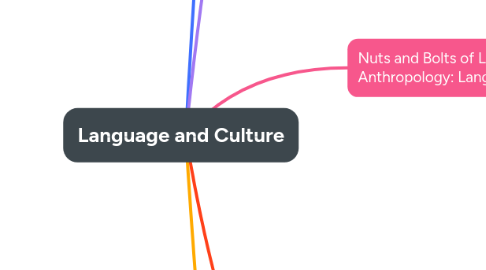
1. Introduction to Linguistic Anthropology
1.1. "The scientific study of language is one of the keys to understanding much of human behavior." (Stanlaw et al., 2018,pg.2)
1.2. Myths surrounding languages such as; Primitive language, grammar, vocabulary deficiencies.
1.3. Linguistics: The study of language to reveal its structure, (the sounds, meanings). Anthropological linguistics: The subfield of anthropology
1.4. Linguistic Anthropology is a field of anthropology, and views language in the cultural form.
2. Methods of Linguistic Anthropology
2.1. "Linguistic anthropologists view language in its cultural framework and are concerned with the rules for its social use; the analysis of its structure is therefore only a means to an end." (Stanlaw et al., 2018, pg.31)
2.2. Linguistics: The study of language Linguistics Anthropology: study of language in biological and sociocultural context
2.3. Three Trends: Americanist Anthropological Linguistics, Linguistic Anthropology and Sociolinguistics, Social Constructivism Two Paradigms: Structural Linguistics, and Chomsky's Transformational Generative Grammer.
2.4. Linguistic anthropologists view language in the cultural form. Anthropologists use exposure in the field to learn more about cultures and languages.
3. Nuts and Bolts of Linguistic Anthropology: Language is sound
3.1. Sounds and Symbols: Phonetic transcription and phonetic alphabet Syntax and structures
3.2. Consonant, phones, phonemes
3.3. "Each language represents a particular variety of the general language code - in other words, no two languages are alike; although some are structurally similar others are quite different" (Stanlaw et al., 2018,pg. 36)
3.4. The two main classes of speech are vowels and consonants. Each language has its own phonetic differences.
4. The Nuts and Bolts - Structure of words and Sentences
4.1. Morphemes and Allomorphs --> Free morphemes & Bound Morphemes
4.2. Morphophonemics: Sound alterations
4.3. Chomsky and Transformational generative grammar
4.4. "Every language has its own stock of morphemes and arranges them into words, phrases, and sentences in a particular way, and every language has its own grammatical categories that vary from one language to the next." (Stanlaw et al., 2018, pg.70)
5. Communicating Nonverbally
5.1. "Used broadly, the term includes bodily gestures, facial expressions, spacing, touch, and smell, ad well as whistle, smoke-signal, and drum "languages" and such optional vocal effects as those that accompany spoken utterances and can be considered apart from actual words." (Stanlaw et al., 2018,pg.87)
5.2. Paralinguistics: Voice qualifiers, Vocal segregates, voice characterizers
5.3. Kinesics: The study of body motions used in communication associated with body language Proxemics: The study of the cultural patterning of the spatial separation individuals maintain in face-to-face encounters
5.4. When we think of communicating, spoken language is the most common way of communication, but there are many different ways people can communicate such as sign language, body language, facial expressions, hand gestures, and other body motions." (Stanlaw et al., 2018, pg. 111)


