
Cells

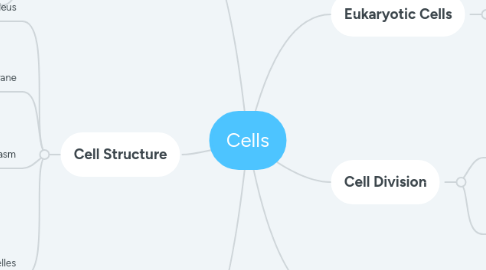
Explore the complex world of cells with this all-inclusive, detailed mindmap. Ideal for students and biology enthusiasts, the mindmap breakdowns the nature of cells into Prokaryotic and Eukaryotic types. It delves deep into the structure and functions of cells from various organisms like bacteria, archaea, animals, plants, and fungi. It further explains key concepts like cell theory and various cell functions, including reproduction, metabolism, responses to the environment, and development. ...

1. Prokaryotic Cells
1.1. Distinctive Characteristics
1.1.1. No nucleus
1.1.2. Smaller in size
1.1.3. Single chromosome
1.1.4. Simple structure
1.2. Examples
1.2.1. Bacteria
1.2.2. Archaea
2. Cell Structure
2.1. Nucleus
2.1.1. Contains DNA
2.1.2. Directs cell activities
2.2. Cell Membrane
2.2.1. Controls what enters and leaves the cell
2.2.2. Provides structure
2.3. Cytoplasm
2.3.1. Where most cell activities occur
2.3.2. Contains organelles
2.4. Organelles
2.4.1. Mitochondria
2.4.1.1. Site of cellular respiration
2.4.2. Endoplasmic Reticulum
2.4.2.1. Site of protein synthesis
2.4.3. Golgi Apparatus
2.4.3.1. Packages proteins for transport
2.4.4. Ribosomes
2.4.4.1. Synthesize proteins
3. Cell Functions
3.1. Energy Production
3.1.1. Photosynthesis in plant cells
3.1.2. Respiration in all cells
3.2. Protein Synthesis
3.2.1. Transcription and translation
3.3. Waste Removal
3.3.1. Lysosomes play a key role
4. Eukaryotic Cells
4.1. Distinctive Characteristics
4.1.1. Have nucleus
4.1.2. Larger in size
4.1.3. Multiple chromosomes
4.1.4. Complex structure
4.2. Examples
4.2.1. Animals
4.2.2. Plants
4.2.3. Fungi
4.2.4. Protists
5. Cell Division
5.1. Mitosis
5.1.1. Results in identical, diploid cells
5.1.2. Used for growth and repair
5.2. Meiosis
5.2.1. Results in non-identical, haploid cells
5.2.2. Used for sexual reproduction
6. Diseases Related to Cells
6.1. Cancer
6.1.1. Uncontrolled cell growth
6.2. Cystic Fibrosis
6.2.1. Defective cell membrane transport
6.3. Sickle Cell Anemia
6.3.1. Mutated red blood cells.