


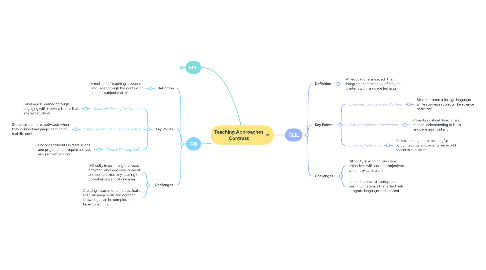
1. EMI
1.1. Definition
1.1.1. Use of English as the primary language of instruction in educational settings, particularly in non-English speaking countries.
1.2. Key points
1.2.1. Enhances English Proficiency
1.2.1.1. Students improve their language skills while learning academic content.
1.2.2. Develops Pronunciation Skills
1.2.2.1. Exposure to native-like pronunciation through instruction.
1.3. Challenges
1.3.1. Varying levels of English proficiency among students can hinder understanding.
1.3.2. Need for teacher training to effectively deliver content in English.
2. CBI
2.1. Definition
2.1.1. A method of teaching a second language through the context of specific subject matter.
2.2. Key Points
2.2.1. Focus on Meaningful Content
2.2.1.1. Language is learned through engaging with relevant topics that interest students.
2.2.2. Enhances Motivation and Retention
2.2.2.1. Students are more motivated when they connect language learning to real-life content.
2.2.3. Critical Thinking Skills
2.2.3.1. Engages students in discussions and projects that require analysis and problem-solving.
2.3. Challenges
2.3.1. Difficulty in balancing the focus between language development and content mastery, leading to potential neglect of one area.
2.3.2. Creating assessments that evaluate both language skills and content knowledge can be complex and time-consuming.
3. CLIL
3.1. Definition
3.1.1. An educational approach that integrates the teaching of subject content with language learning.
3.2. Key Points
3.2.1. Combines Language and Content
3.2.1.1. Students learn a foreign language while studying subjects like science or history.
3.2.2. Fosters Cognitive Engagement
3.2.2.1. Promotes critical thinking and deeper understanding of both language and content.
3.2.3. Enhances Relevance
3.2.3.1. Makes learning more meaningful by connecting language to real-world contexts and issues.
3.3. Challenges
3.3.1. Difficulty in aligning language objectives with content objectives within the curriculum.
3.3.2. Limited access to appropriate teaching materials that effectively integrate language and content.