ADHD
by Ivalee Jones
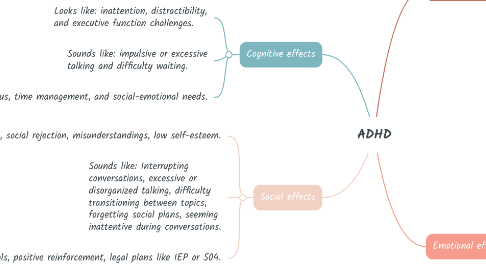
1. Cognitive effects
1.1. Looks like: inattention, distractibility, and executive function challenges.
1.2. Sounds like: impulsive or excessive talking and difficulty waiting.
1.3. Accommodations: support organization, focus, time management, and social-emotional needs.
2. Social effects
2.1. Looks like: Impulsivity (interrupting, excessive talking), inattention (missing cues, appearing disinterested), hyperactivity (intruding physically or socially), difficulties with time management, social rejection, misunderstandings, low self-esteem.
2.2. Sounds like: Interrupting conversations, excessive or disorganized talking, difficulty transitioning between topics, forgetting social plans, seeming inattentive during conversations.
2.3. Accommodations: Seating adjustments, quiet workspace, movement opportunities, clear instructions, breaking tasks into smaller parts, extended time, peer note-taking, organizational tools, positive reinforcement, legal plans like IEP or 504.
3. Linguistic effects
3.1. Looks like: manifests as inattentive, impulsive, and hyperactive behaviors that interfere with effective verbal expression and understanding.
3.2. Sounds like: affects communication through speech and language processing difficulties.
3.3. Accommodations: focus on minimizing distractions, supporting organization, providing extra time, and using behavioral strategies to help individuals with ADHD succeed academically and socially.
4. Emotional effects
4.1. Looks like: intense, fluctuating emotions like frustration, anger, and anxiety, with difficulties in regulating these feelings.
4.2. Sounds like: frequent irritability, emotional outbursts, mood swings, and sensitivity to criticism. People with ADHD may express impatience, restlessness, or overwhelm in their speech and behavior.
4.3. Accommodations: include emotional support, structured environments, patience in communication, flexible deadlines, and tools for emotional regulation such as mindfulness and therapy. Providing breaks and organizational aids can also help manage emotional challenges and reduce stress triggers.


