
Ecological Economics

Plan your projects and define important tasks and actions

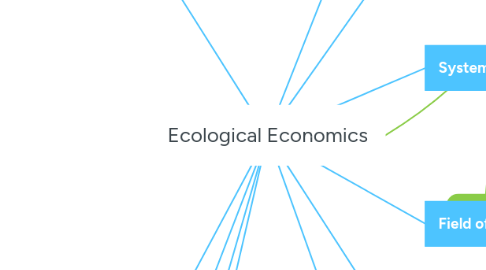
1. Distributive ecological conflicts
1.1. Strong impact
1.1.1. Biosphere
1.2. Social struggle
1.3. Negative externality
1.3.1. Social costs
1.3.1.1. Poverty
1.3.1.2. Health
1.3.2. Private costs
1.4. Unequal ecological trade
1.5. Concepts
1.5.1. Environmental racism
1.5.1.1. Toxic waste
1.5.1.1.1. Territory
1.5.2. Environmental justice
1.5.2.1. Against
1.5.2.1.1. Environmental racism
1.5.3. Environmental blackmail
1.5.4. Toxic imperialism
1.5.5. Ecologically unequal exchange
1.5.6. Ecological debt
1.5.7. Transboundary pollution
1.5.8. Environmental space
1.5.9. Ecological footprint
1.5.10. Bio piracy
1.5.11. Indigenous environmentalism
1.5.12. Ecologism of the poor
1.5.13. Urban fights
1.5.13.1. Clean water
1.5.13.2. Green areas
1.5.14. Labor struggles
1.5.14.1. Health
1.5.14.2. Job security
2. Political ecology
2.1. Study
2.1.1. Local and international
2.1.1.1. Distribution
2.1.1.1.1. Environmental costs
2.1.1.2. Appropriation
2.1.1.2.1. Natural resources
3. Greenhouse effect
3.1. Global issues
3.2. National policies
3.3. Reduction
3.3.1. Emissions of CO2
4. conservation of biodiversity
4.1. Wild
4.2. Agricultural
4.3. Rights of farmers
5. Solutions
5.1. Sustainable development
5.2. eco-efficiency
5.3. Ecological modernization
6. Meaning
6.1. Ecology
6.1.1. Plants
6.1.2. Animals
6.2. Economy
6.2.1. Humans
6.2.1.1. Subsist
6.2.1.1.1. Satisfaction of needs
6.3. Connection
6.3.1. Government
6.3.1.1. House
6.3.1.1.1. Nature
6.3.1.1.2. Humans
6.4. Dynamic
6.4.1. Systemic
6.4.1.1. Evolutionary
7. Science and etics
7.1. Neoclassical economics
7.1.1. Consumer sovereignty
7.1.1.1. Efficiency
7.2. Ecological economy
7.2.1. Individual and social health
7.2.1.1. Sustainability
8. System closed
8.1. Company
8.2. Market
8.3. Manufactures
8.4. Family
8.5. Production factors
9. Field of study
9.1. Transdisciplinary
9.1.1. Beyond
9.1.1.1. Economic growth
9.1.1.2. Sustainability of the environment
10. Open system
10.1. ENVIRONMENT
10.1.1. Solar energy.
10.1.2. Raw Materials.
10.1.2.1. Material waste.
10.1.2.1.1. Recycling.
10.1.3. Useful energy.
10.1.4. Flow
10.1.4.1. Material
10.1.4.2. Energy
11. Environmental problems
11.1. Growth of social metabolism
11.1.1. Expansion of economic frontiers
11.2. Accelerated growth
11.2.1. Population
11.2.2. Economic
11.3. Human needs
11.3.1. Over consumption