Free visual marketing plan template
Map goals, channels, campaigns and budget in one connected view. Marketing planning software built for small business teams who'd rather do marketing than write documents.


Rated 4.6/5

Made in the EU
GDPR compliant
Map goals, channels, campaigns and budget in one connected view. Marketing planning software built for small business teams who'd rather do marketing than write documents.

Used by 2.7M teams





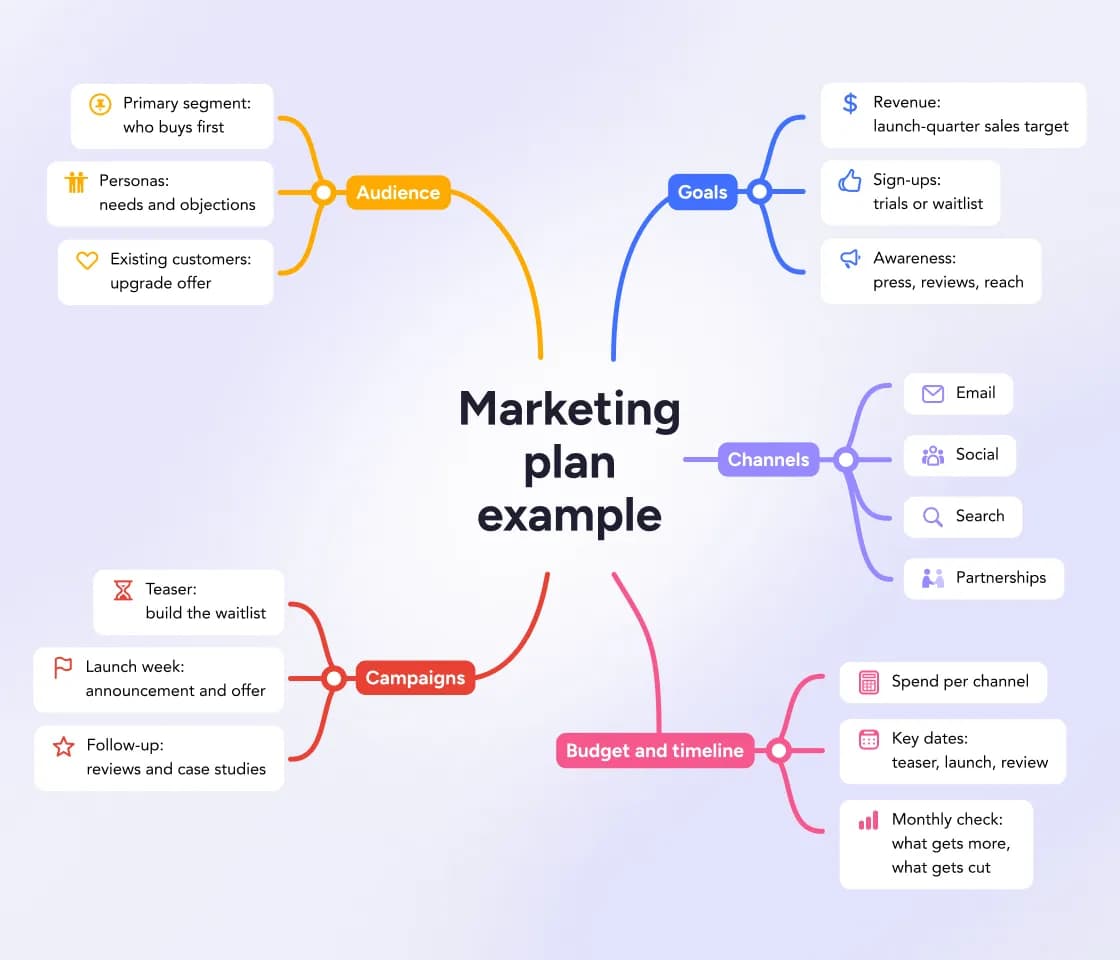
Every channel, campaign and budget line branches from one central goal. The whole plan stays in view, instead of scattered across a lengthy document.
Attach the campaign brief, the ad copy and the research to the branch where they're used. When someone opens the plan, everything they need is already there.
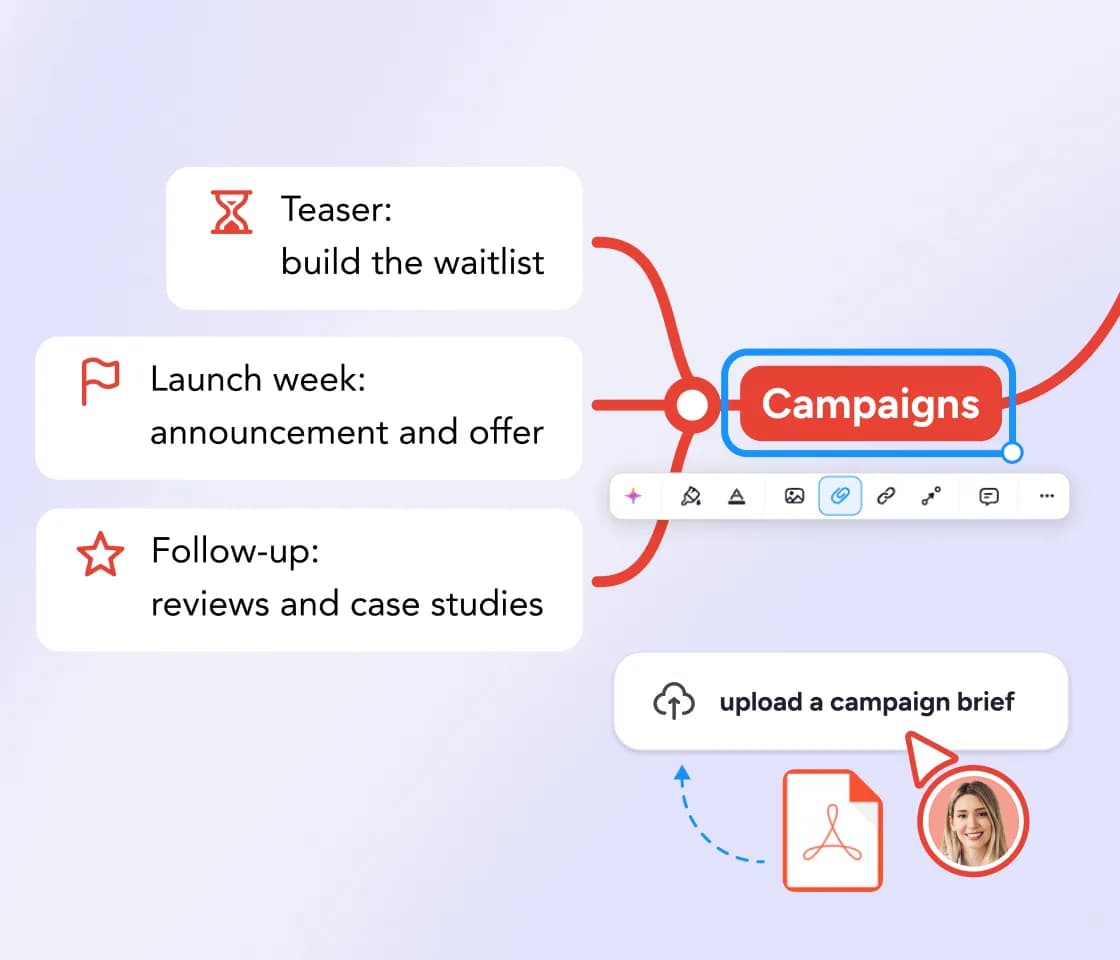
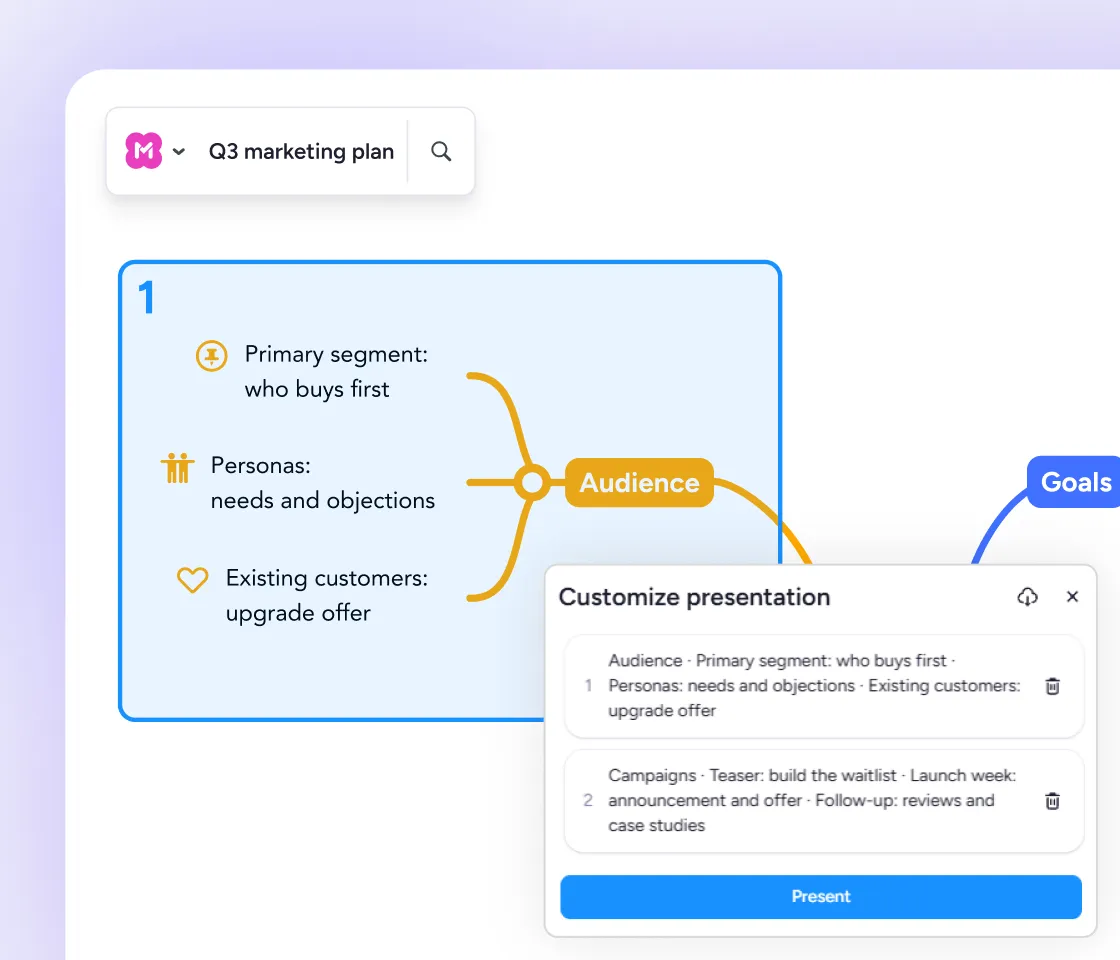
Select areas of the map as frames, order them, and present directly from your mind map. When the plan changes, the presentation is already up to date.
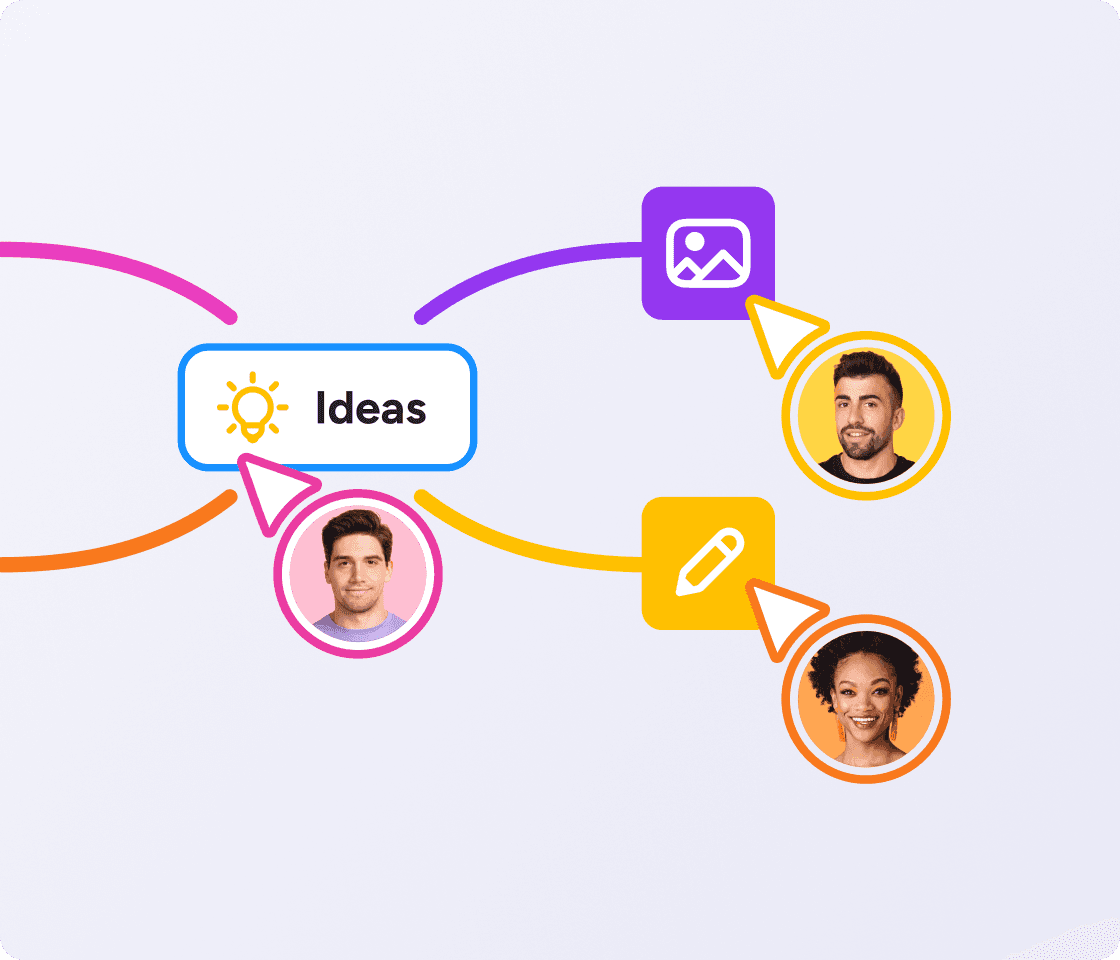
Everyone works in the same live plan, with comments and mentions to settle questions where they come up. One version, always current, no copies floating around.
A marketing plan is a document that sets out what a business wants marketing to achieve and how it will get there: the goals, the audience, the channels, the campaigns, and the budget behind them, usually for a quarter or a year.
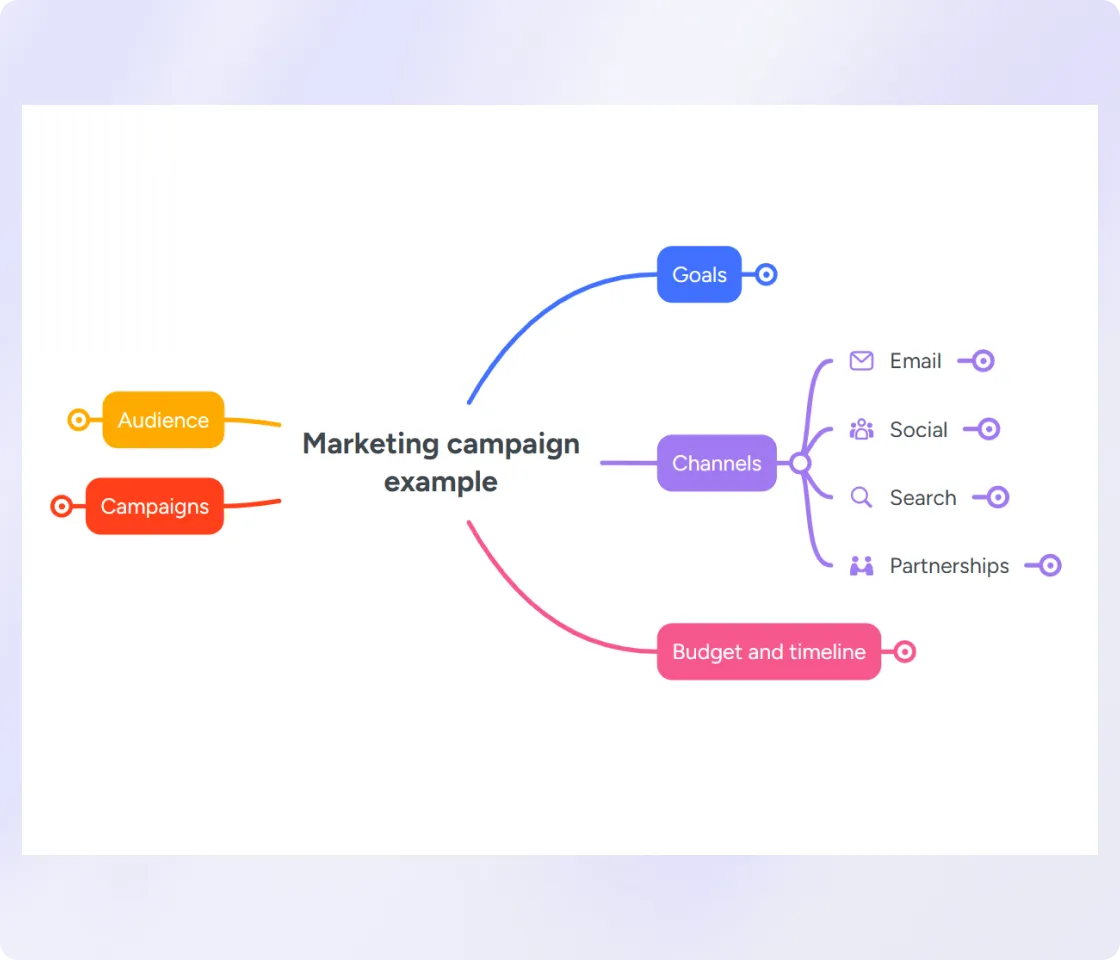
Most plans cover five things: the goals, the audience you're targeting, the channels you'll use, the campaigns you'll run, and the budget and timeline behind them.
The format matters less than the connections, because a goal without a channel is a wish, and a campaign without a budget is a draft. That's why a mind map suits the job: every part of the plan stays attached to the goal it serves.
A marketing plan isn't a marketing strategy: the strategy sets the direction, the plan turns it into scheduled, budgeted work. And it isn't a marketing calendar, which is the schedule a finished plan feeds. Write the plan first; the calendar falls out of it.
This template maps a product launch across five branches, from goals and audience through channels, campaigns and budget. Swap in your own targets and it works just as well as a yearly marketing plan.
You don't need a 30-page marketing plan outline to get going. Five steps take you from a blank map to a working plan, whether you're a marketing team of one or ten.
Set the goals. Write the big target at the center and branch into the two or three results marketing owes the business this quarter. Revenue, signups, awareness: name numbers where you can.
Define the audience. Give each segment you're trying to reach its own branch, with a note on what they care about and where they spend time.
Pick the channels. For a marketing plan for a small business, three channels done well beat eight done thinly. Branch each channel from the goal it serves.
Plan campaigns and budget. Under each channel, add the campaigns you'll run, what each costs and when it lands.
Review and adjust. A plan is a living map. Revisit it monthly, prune what underperforms and grow what works.

As your trusted digitalization partner, we're committed to providing a secure and reliable platform so you can manage your daily work with confidence.
ISO 27001 certified
Fully GDPR compliant
Hosted in Germany
Admin controls
Security best practices



MindMeister connects with MeisterTask, Google Workspace and Microsoft Teams, so your plan links up with the tools your campaigns already run on.
Explore integrationsA marketing strategy sets the direction: who you're targeting, how you position and why you'll win. A marketing plan turns that direction into scheduled, budgeted work. If you're comparing a marketing strategy template with a plan template, you usually need both halves: in MindMeister, the strategy sits at the center of the map and the plan branches out from it.
Goals, audience, channels, campaigns, and budget and timeline. Some outlines stretch to seven steps by splitting research and positioning into their own stages. The template on this page uses the five-branch version, because it's the structure most small teams actually maintain.
Yes. MindMeister's free Basic plan lets you build and share mind maps at no cost, so you can map a whole marketing plan before paying for anything. A lot of marketing planning tools are built for enterprise budget tracking; a mind map keeps the plan itself fast, visual and easy to share.
You can, and plenty of teams do. The trouble is that a document buries the structure: channels, campaigns and budgets end up in sections nobody re-reads once the file is saved. A map keeps every part of the plan in view, and you can still export it when someone needs a file.
Yes. Meister AI works as a marketing plan generator: describe the launch, get a draft plan. You can also upload a brief or a research file, and the key ideas get organized into branches automatically.
A mind map is where the plan takes shape; a marketing calendar is the schedule a finished plan feeds. Keep goals, channels and campaigns in MindMeister, then move the dated work into a calendar or a task manager like MeisterTask when it's time to execute.